
Daily Potassium Calculator
Estimate how much potassium per day you need and compare that target with foods eaten today.
Result
—
Daily target
— mg potassium
- From foods entered
- —
- Target covered
- —
- Remaining
- —
iPhone & iPad · Free
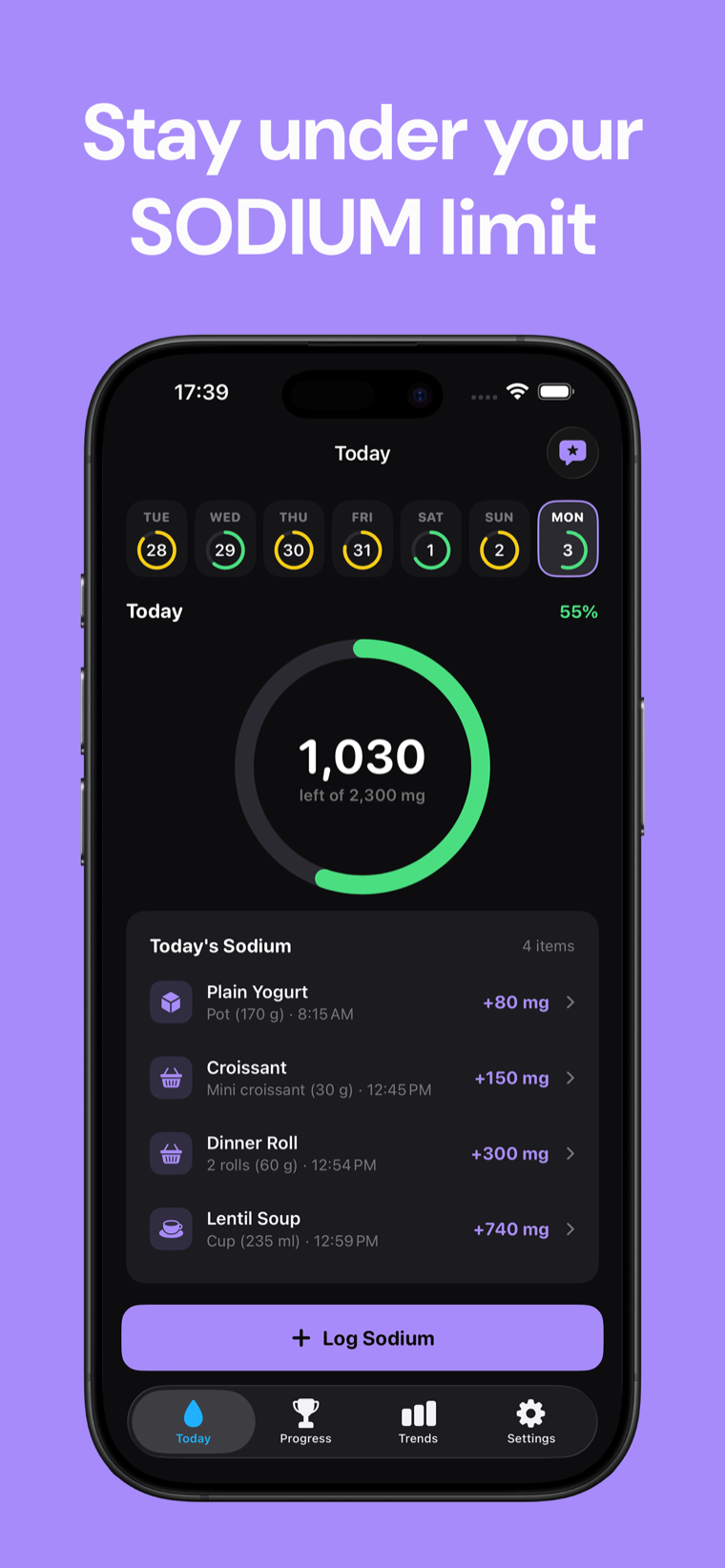
Track it in Sodium Tracker.
Track sodium and potassium choices alongside your daily food notes on your device.

How much potassium per day do you need?
How much potassium per day you need depends on age, sex and whether you are pregnant or lactating. This calculator uses the National Academies Adequate Intake values used by the Dietary Guidelines and FDA.
The FDA Daily Value on Nutrition Facts labels is 4,700 mg, while the adult Adequate Intake values are 3,400 mg for men and 2,600 mg for women. The DV and the AI differ, so a label percentage is not the same as your personal target. The World Health Organization suggests at least 3,510 mg per day for adults.
Potassium and sodium work against each other on blood pressure. Increasing potassium and reducing sodium both lower blood pressure, which is why the DASH pattern does both.
Percent covered = (potassium from foods ÷ daily target) × 100 This is a dietary reference, not medical advice. People with chronic kidney disease, or taking ACE inhibitors, ARBs or potassium-sparing diuretics, may need to limit potassium because too much can cause dangerous hyperkalaemia. Follow your clinician's target rather than this one. Never use this calculator to choose a supplement.
Daily potassium calculator FAQ
What is the daily potassium target?
The target depends on age, sex and pregnancy or lactation status. Adults generally have an Adequate Intake of 3,400 mg for men and 2,600 mg for women; pregnancy is 2,900 mg and lactation is 2,800 mg.
Why does the FDA label show 4,700 mg?
The FDA Daily Value is 4,700 mg, while the National Academies Adequate Intake values vary by age, sex and life stage. The DV and AI are different reference systems.
What does the food list include?
It includes typical servings of common foods such as bananas, potatoes, spinach, beans, yogurt, milk, lentils and salmon. Enter servings eaten today to estimate coverage.
Should I increase potassium if I have kidney disease?
Not without your clinician's advice. Chronic kidney disease and some medicines can require a potassium limit, and too much potassium can cause dangerous hyperkalaemia.
Does this calculator recommend potassium supplements?
No. It is a dietary reference only and does not recommend supplements or replace a clinician's target.