iPhone & iPad · Free 7-day trial
The Ultimate Sodium Tracker App in 2026
Sodium Tracker: Heart Health sets a daily salt limit from FDA, AHA and WHO guidance, then makes logging fast enough to actually keep up with — photo, barcode, voice, or a library of the foods that carry the most sodium.

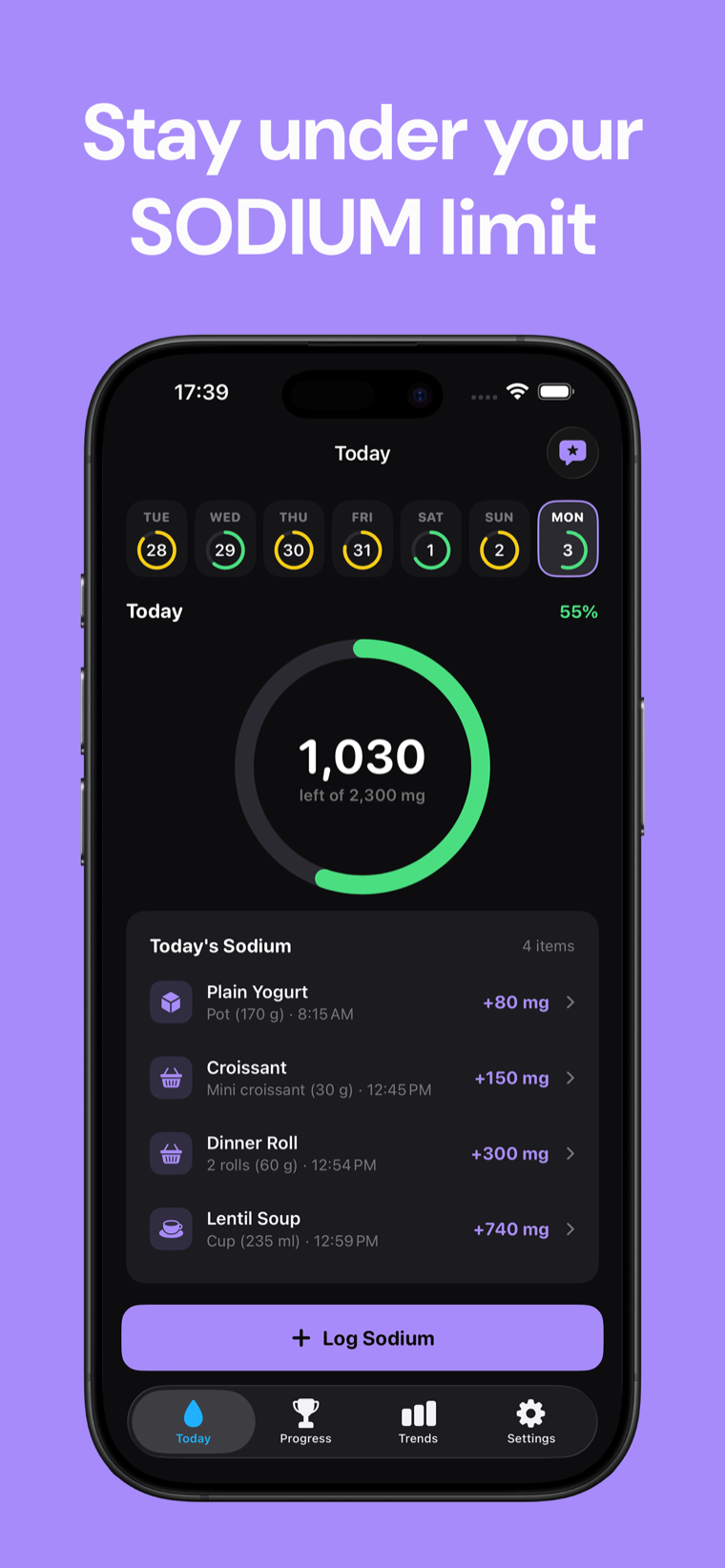
Features
-
A limit with a basis
Your daily ceiling comes from FDA, AHA and WHO guidance, your age, and how strict you want to be — not a number someone made up.
-
Milligrams or grams of salt
Read the number the way your labels print it. Sodium in milligrams or salt in grams, switchable at any time — it's the same intake either way.
-
The foods that actually matter
A library of 187 high-sodium foods and drinks. Bread, deli meat, cheese, sauces and soup carry far more than the shaker ever does.
-
Photo, barcode or voice
Log from a picture, scan a package, or just say what you ate. AI does the first pass and you confirm before anything saves.
-
Your day at a glance
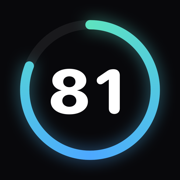
A clean progress ring shows how much of your limit is left, with a weekly calendar tracking the streak behind it.
-
Yours, on your device
Everything runs locally. No accounts, no data collection, no ads.
Screenshots
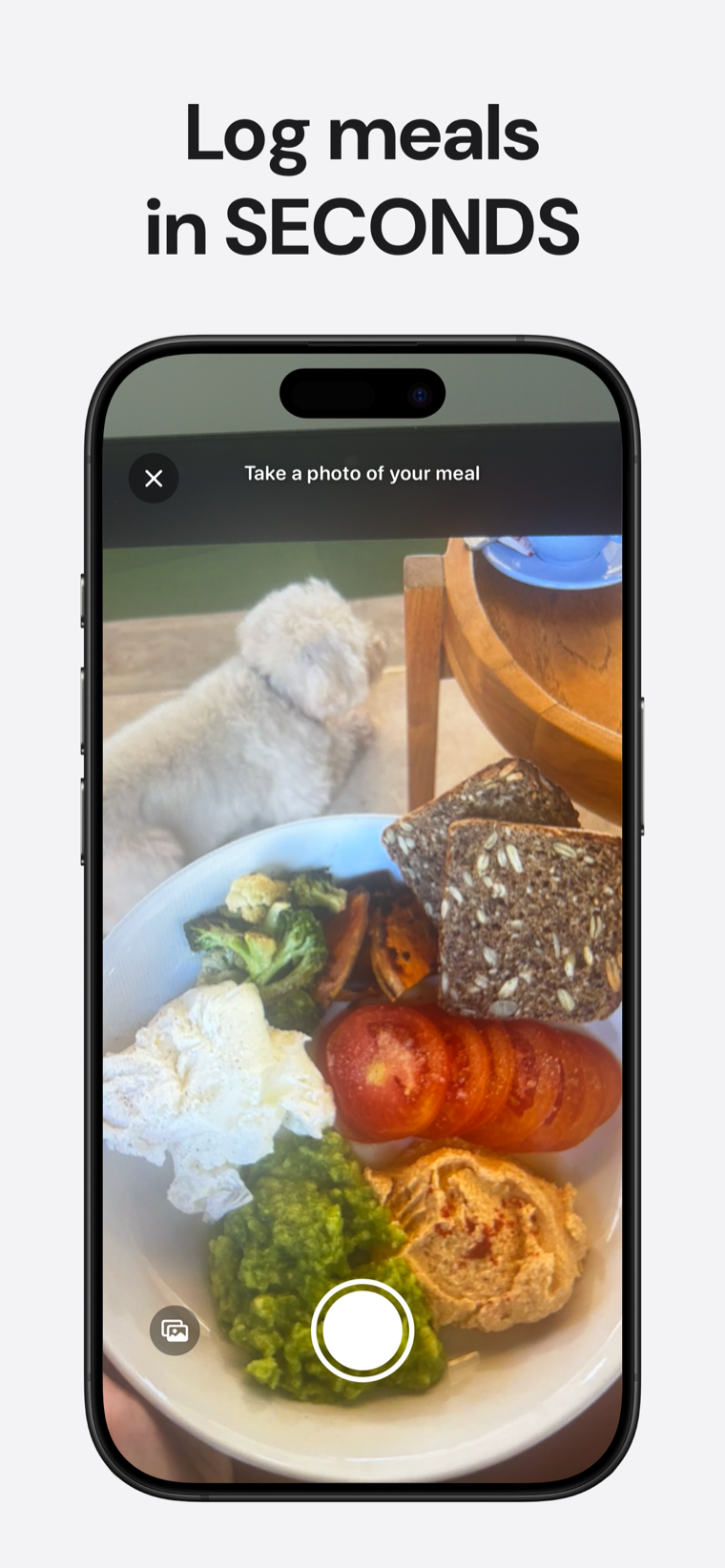
Search the food library, or use a photo, barcode or your voice. AI fills in the details and you review every result before it saves.
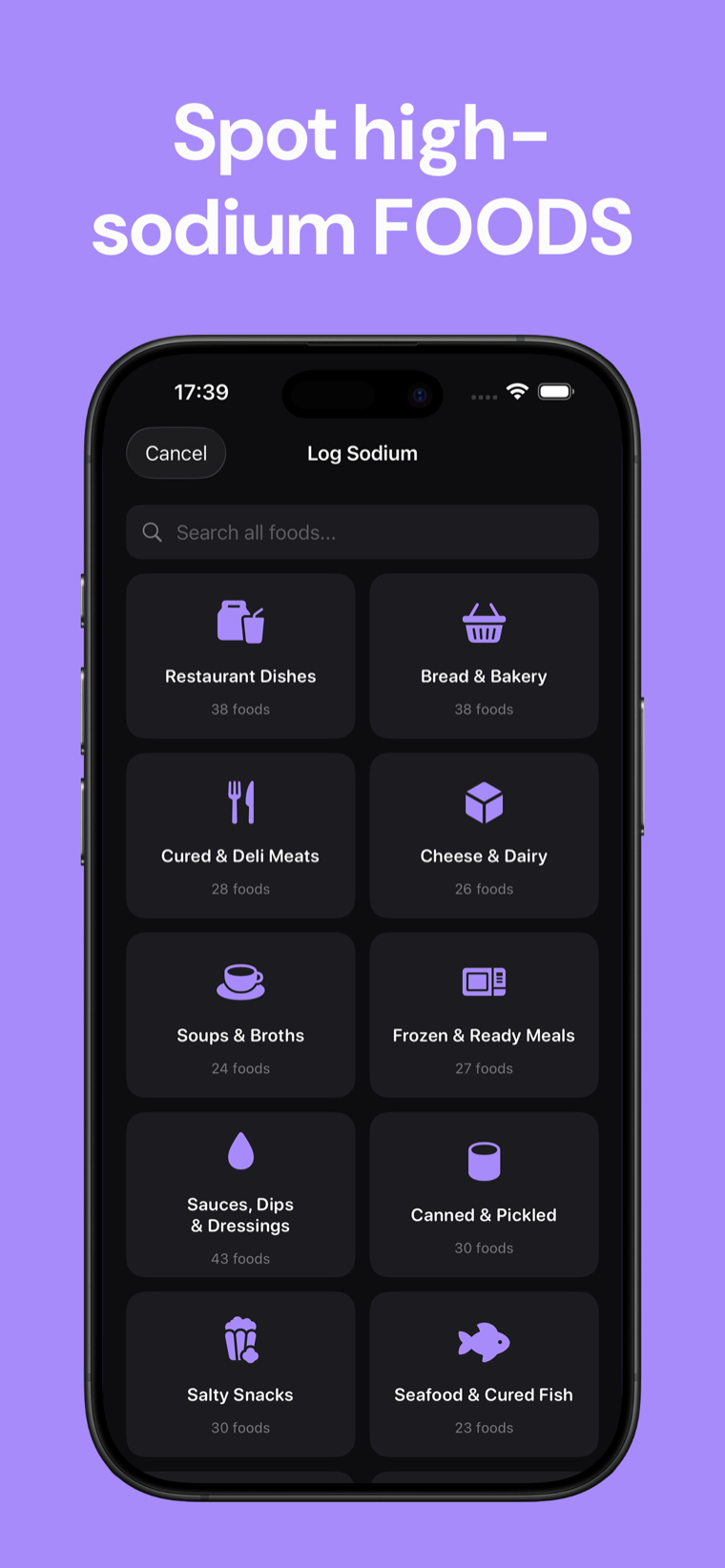
187 high-sodium foods and drinks with the sodium per serving, so you can see which everyday items are quietly using up your whole day's allowance.
How it works
-
Set your limit
Enter your age and choose how strict you want to be. The app applies FDA, AHA and WHO guidance to set your daily sodium ceiling.
-
Log what you eat
Search the library or capture a meal by photo, barcode or voice. Each entry counts against the day's allowance.
-
Stay under it
The ring shows what's left before you spend it. Days under the limit build your streak on the weekly calendar.
FAQ
Frequently asked questions
How is my daily sodium limit set?
From FDA, AHA and WHO guidance, combined with your age and how strict you want to be. The FDA and AHA put the adult ceiling at 2,300 mg a day, and the app builds your target around that rather than an arbitrary number.
How much sodium do most people eat?
Most adults eat around 3,400 mg a day, well past the 2,300 mg the FDA and AHA recommend. Almost none of it comes from the salt shaker.
Where does most dietary sodium come from?
Bread, deli meat, cheese, sauces, soup and restaurant meals carry the vast majority of it. That's why putting the salt away at the table changes so little on its own.
Can it show salt in grams instead of sodium in milligrams?
Yes. You can read the number either way and switch whenever you like — it's the same intake, shown the way your labels print it. European labels usually give salt in grams; US labels give sodium in milligrams.
Can I log a meal from a photo?
Yes. You can log from a photo, a barcode scan, or your voice. AI does the first pass and shows you the result to review and correct before anything is saved.
Is it useful for a DASH or low-sodium diet?
Yes. Both are built around a daily sodium ceiling, which is exactly what the app tracks. You can set a stricter limit than the standard 2,300 mg and log against it.
How many foods are in the library?
187 high-sodium foods and drinks, with the sodium per serving for each — chosen to cover the items that actually move the number.
Does it track my streak?
Yes. A weekly calendar shows which days you stayed under your limit, so the habit stays visible.
Do I need an internet connection or an account?
No account is ever required and your data stays on your device. AI photo, barcode and voice logging need a connection; searching the library and logging by hand work offline.
Does Sodium Tracker work on iPad?
Yes. It runs on both iPhone and iPad.
Can it help with blood pressure?
Sodium Tracker records the sodium in what you eat — it doesn't measure blood pressure and isn't a medical device. If you're managing hypertension, use it alongside your doctor's guidance, not instead of it.
Is sodium the same thing as salt?
Not quite. Table salt is about 40% sodium by weight, so 2,300 mg of sodium is roughly 5.8 g of salt. The app handles the conversion and shows whichever unit you prefer.
Know exactly where your salt stands.
Download Sodium Tracker and stay under your limit without guessing.
Free Sodium tools
- Banana Potassium CalculatorEnter a banana size and quantity to see total potassium in milligrams, its share of an adult daily target, and how it compares with other potassium-rich foods.
- Blood Pressure Category ChartUse this blood pressure chart by age and gender to place an adult reading in the AHA category it reaches. Age and sex do not change the adult thresholds.
- Daily Potassium CalculatorEstimate how much potassium per day you need and compare that target with foods eaten today.
- Daily Sodium Limit CalculatorEnter your age and a guideline to see how much sodium per day it recommends, plus the equivalent amount of table salt and a comparison with average US intake.
- DASH Diet Food ListSearch a DASH diet food list by food group, serving target and sodium preference. Review each food’s placement, serving context and sodium notes.
- DASH Diet Grocery List BuilderChoose your household size, days of meals, DASH food groups and sodium preference to build a printable grocery list.
- DASH Diet Meal PlannerPick your calorie level, your sodium target and how many meals you eat. The planner shows the published DASH daily serving targets for that calorie level and divides them — along with your sodium budget — across your meals.
- High-Sodium Foods ChartFilter a chart of high sodium foods by category and serving size. See sodium per serving and its percentage of the 2,300 mg daily limit.
- Low-Sodium Foods Reference ToolFilter a fixed list of foods low in sodium by category, serving size and sodium threshold.
- MAP Blood Pressure CalculatorEnter systolic and diastolic readings to estimate mean arterial pressure, see the published MAP reference band, calculate pulse pressure and identify the AHA category for the raw reading.
- Milligrams to Grams ConverterConvert milligrams to grams and between micrograms, milligrams, grams, kilograms, ounces and pounds. See the result written out and compare common nutrition-label values.
- Salt to Sodium ConverterConvert between salt and sodium units instantly. See grams of salt, milligrams of sodium, teaspoons of salt and the share of the 2,300 mg daily limit.
- Sodium Per-Meal Budget CalculatorTurn a daily sodium goal into an even meal-by-meal budget, then adjust it after reserving sodium for snacks.
From the blog
All articles →- Best 8 Fooducate Alternatives in 2026: Compare Smarter PicksCompare fooducate alternatives across iOS and Android, Apple Watch support, barcode tools, scoring rules, nutrition depth, and pricing to choose the right app.
- Best 9 MyFitnessPal Alternatives in 2026: Compare SmarterCompare myfitnesspal alternatives by platform, watch support, food database depth, scoring rules, privacy, and pricing to find the right nutrition tracking app.
- Best 9 Nutrients Alternatives in 2026: Compare Smarter OptionsCompare nutrients alternatives across iOS and Android, watch support, nutrient scoring rules, meal logging, reports, pricing, and privacy to find the right fit.