Low-Sodium Foods Reference Tool
Filter a fixed list of foods low in sodium by category, serving size and sodium threshold.
Results
Enter a threshold and serving size to see foods.
| Food | Category | Sodium per serving |
|---|
iPhone & iPad · Free
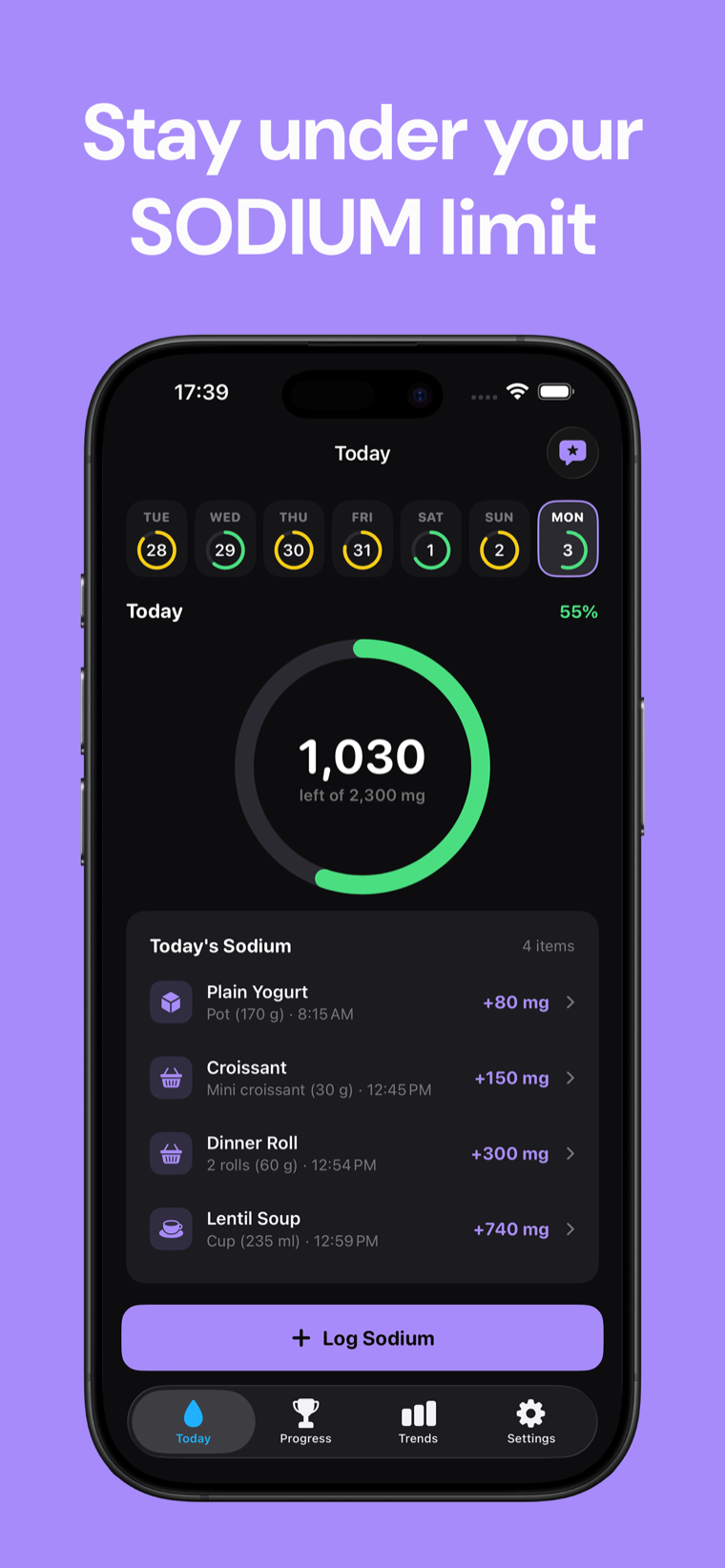
Track it in Sodium Tracker.
Track sodium across meals and compare choices with your personal daily limit.

How this low-sodium food list works
If you are looking for foods low in sodium, this reference lets you choose a category, serving size and maximum sodium per serving. It uses a fixed table of composition values and leaves out foods whose source row does not report meaningful sodium.
Each matching food is converted from its source value per 100 g to the serving size you enter, then sorted from lowest to highest sodium. The list is a reference for comparing foods, not a diagnosis or individualized medical advice.
sodium per serving = sodium per 100 g × serving grams ÷ 100 The source says a low-sodium label claim in the US means 140 mg or less per serving; labels and preparation can vary, so check the package or recipe when it matters. A single reading is not a diagnosis, and a clinician decides what is appropriate for you.
USDA FoodData Central ↗FDA: Sodium in your diet ↗NIH Office of Dietary Supplements ↗
Low-sodium foods FAQ
What does this tool calculate?
It filters a fixed food table by category and maximum sodium, converts each source value to your entered gram serving, and sorts the matches by sodium.
Why can a food’s sodium change with serving size?
The source values are reported per 100 g. A larger or smaller serving changes the amount calculated for that portion.
Does low sodium mean sodium-free?
No. The source distinguishes low sodium at 140 mg or less per serving, very low sodium at 35 mg or less, and sodium free under 5 mg.
Why is a food missing from the list?
Only foods with a meaningful sodium value in the supplied source table are included. Foods with an em dash for sodium are omitted rather than estimated.
Does this replace nutrition advice?
No. It is a comparison reference. A single reading is not a diagnosis, and a clinician decides what sodium target is appropriate for you.