
Best 10 Cronometer Alternatives in 2026: Find Your Best Fit
Introduction
Sodium Tracker is the best of these cronometer alternatives for people who mainly want to monitor sodium and salt intake. This list also covers calorie, macro, nutrient, food-quality, privacy-focused, fasting, and condition-specific tracking apps for iPhone, iPad, and Android. Each one fits a different reason for moving on from Cronometer.
Quick comparison
| App | Best for | Platform | Price |
|---|---|---|---|
| Sodium Tracker | Sodium and salt limits | iPhone, iPad | Unknown |
| MyFitnessPal | Broad calorie and habit tracking | Android | Freemium |
| MyNetDiary | Photo-based detailed food logging | Android | Freemium |
| Yazio | Meal planning and recipes | Android | Freemium |
| MacroFactor | Adaptive calorie and macro targets | Android | Paid |
| Lose It! | Simple calorie budgeting | iPhone | Freemium |
| Lifesum | Planning, logging, and grocery lists | iPhone | Freemium |
| Foodnoms | Private, flexible nutrient tracking | iPhone, iPad | Freemium |
| Nutritionix Track | Natural-language food logging | iPhone, iPad | Freemium |
| Fooducate | Food grades and label guidance | Android | Freemium |
1. Sodium Tracker
Best for: iPhone and iPad users who want a focused sodium and salt tracker instead of a broad food database.
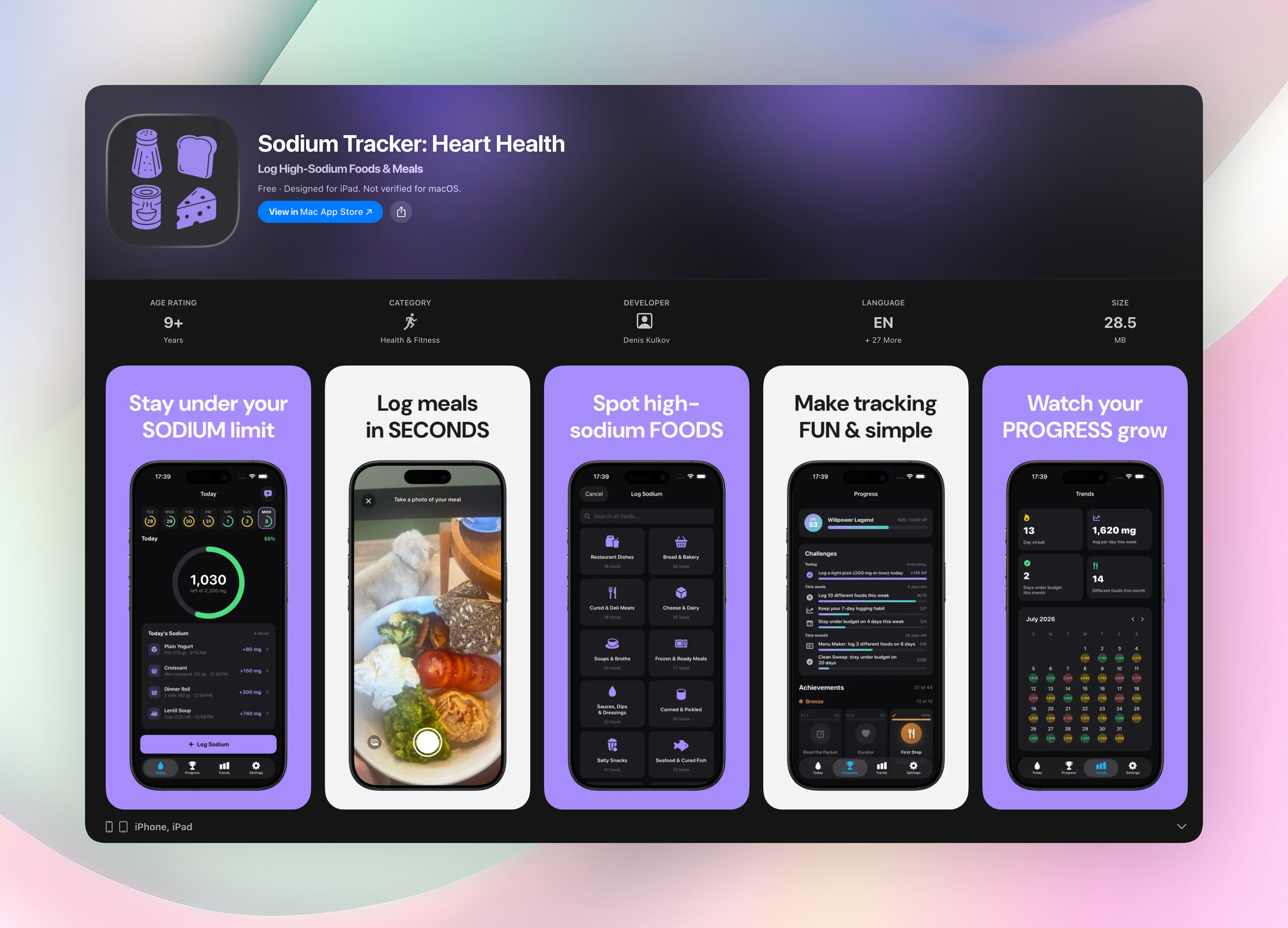
Sodium Tracker keeps one goal front and center: staying within your daily sodium limit. You can choose guidance from the FDA, American Heart Association, or WHO, then adjust it based on your age and how strict your target needs to be.
Logging is built for speed, especially when you are recording common high-sodium foods. Add items from the focused library, or use a photo, barcode, or voice entry and check the result before saving. The app shows sodium in milligrams or salt in grams, matching the formats used on many nutrition labels.
A clear progress ring shows how much of your daily limit is left. That makes the app useful for people watching blood pressure, following a clinician-recommended limit, or trying to cut back on salt without tracking every nutrient.
- Guidance-based daily sodium limits
- Quick logging for high-sodium foods and drinks
- Progress ring and weekly streak calendar
- On-device use with no account, ads, or data collection
Get Sodium Tracker or find Sodium Tracker on the App Store.
2. MyFitnessPal
Best for: Tracking food, calories, exercise, water, and macros in one app.
MyFitnessPal is a strong Cronometer alternative for people who want to track overall habits instead of focusing mainly on micronutrients. It combines personalized goals with barcode scanning, meal scanning, AI-assisted logging, exercise records, water intake, and intermittent-fasting support.
Meal scanning is handy when typing every ingredient feels like too much work. With its wide range of tools, the app can serve as a calorie counter, workout log, and daily habit tracker in one place.
3. MyNetDiary
Best for: Detailed food logging with photo-based meal entry.
MyNetDiary combines barcode scanning, meal photos, exercise records, recipes, macro tracking, and protein goals. It can also track up to 108 nutrients, making it a good choice for people who want detailed nutrition information in a more guided diary.
Meal-photo logging is its most convenient feature. When searching for every ingredient takes too long, a photo gives you a faster starting point to review and correct.
4. Yazio
Best for: Calorie tracking with meal plans and recipes.
Yazio includes a searchable food database, barcode scanning, macro analysis, water and activity tracking, and optional fasting tools. Its main difference from a basic calorie counter is the focus on deciding what to eat next.
Meal plans and recipes help turn a calorie target into a more organized routine. Yazio suits people who want suggestions and preparation help, not just a record of meals they have already eaten.
5. MacroFactor
Best for: Adaptive calorie and macro targets based on real progress.
MacroFactor uses nutrition logs, weight changes, and estimated energy expenditure to adjust its recommendations. That makes it a useful Cronometer alternative for people whose calorie needs change with their weight or activity level instead of staying fixed.
Barcode scanning, micronutrient tracking, custom foods, recipes, and weekly check-ins round out the app. Its adaptive targets are the main reason to choose it. MacroFactor responds to your logged results instead of relying only on an initial estimate.
6. Lose It!
Best for: Straightforward calorie budgeting and weight-loss progress on iPhone.
Lose It! creates a personalized calorie budget and tracks food, exercise, nutrients, macros, protein, carbohydrates, and weight progress. Premium access adds barcode scanning, photo and voice meal logging, fasting tools, and fitness integrations.
Photo and voice logging save the most time. They make Lose It! a practical choice for people who want faster entry without building every meal by hand.
7. Lifesum
Best for: Combining flexible meal logging with nutrition plans.
Lifesum supports photo, voice, text, and barcode logging, along with macro and water tracking. It also includes recipes, nutrition plans, grocery lists, and fitness integrations, so the app handles both planning and daily recording.
Grocery lists are particularly useful when you want to turn nutrition goals into a shopping plan. Lifesum is a better fit than a basic diary for people who want help before meals as well as after them.
8. Foodnoms
Best for: Privacy-minded iPhone and iPad users who want flexible goals.
Foodnoms lets you log foods and meals, scan barcodes and nutrition labels, track weight trends, follow fasting periods, and connect with Apple Health. Its calorie and nutrient goals are customizable, so you can choose which measures appear in your daily view.
Privacy-focused tracking is the main reason to consider it. Foodnoms offers a more controlled experience for people who want nutrition data without relying on a large all-purpose platform.
9. Nutritionix Track
Best for: Fast food entry using ordinary language.
Nutritionix Track uses predictive search and natural-language logging alongside barcode scanning, nutrient totals, exercise, weight, water, and calorie and macro goals. Its food database was developed with registered dietitians, which may appeal to people who want familiar foods and plain-language entries.
You can type a meal description instead of adding every item through separate searches. That approach makes daily logging quicker for straightforward meals.
10. Fooducate
Best for: Understanding packaged foods while shopping.
Fooducate tracks calories, macros, workouts, weight, and nutrition, but its main focus is product guidance. Barcode scanning analyzes labels and ingredients, assigns food grades, and suggests healthier alternatives.
Food grades are especially useful when comparing packaged products before buying them. Choose Fooducate if you want more than a calorie tally and would like help judging the quality of supermarket food.
How we picked these apps
These Cronometer alternatives were selected for practical differences, not because they all offer the same feature set. We compared logging speed, nutrient and macro depth, barcode and label scanning, goal setting, and platform availability.
The list covers different priorities, including sodium tracking, weight loss, adaptive macros, meal planning, privacy, fasting, and food-quality guidance. Sodium Tracker ranks first because a focused sodium limit and progress view can be more useful than a broad tracker for the right person.
Features, platform support, and premium access can change by app and plan. Check the current details for your device before choosing a tracker for the long term.
Frequently asked questions
Is Sodium Tracker a good Cronometer alternative?
Yes, if your main goal is monitoring sodium or salt rather than tracking every nutrient. It offers guidance-based limits, quick food logging, and a clear progress ring without requiring you to manage a large general-purpose food diary.
Which apps are best for calories and detailed nutrients?
MyFitnessPal and Lose It! are strong choices for broad calorie and macro tracking. MyNetDiary, MacroFactor, and Foodnoms are better fits when detailed nutrients matter. MyNetDiary offers a wide nutrient range, MacroFactor adjusts targets, and Foodnoms provides flexible goals.
Which apps support scanning, photos, voice, fasting, and planning?
Most options cover at least one faster entry method. MyFitnessPal, MyNetDiary, Yazio, Foodnoms, Nutritionix Track, and Fooducate offer barcode scanning, while MyNetDiary and Lose It! support photo logging. Lose It! and Lifesum offer voice-based entry, and Yazio, Lose It!, Foodnoms, and MyFitnessPal include fasting-related tools. Yazio and Lifesum are the strongest picks for meal planning.
The apps listed here are split by platform: Sodium Tracker is for iPhone and iPad; MyFitnessPal, MyNetDiary, Yazio, MacroFactor, and Fooducate are listed for Android; and Lose It!, Lifesum, Foodnoms, and Nutritionix Track are listed for iPhone or iPad. If you are tracking sodium for a diagnosed condition, confirm your target with a qualified healthcare professional.
The verdict
Sodium Tracker is the top Cronometer alternative for iPhone and iPad users who want a simple, focused way to monitor sodium. Its guidance-based limits, fast food logging, and progress ring keep the main goal visible without adding unnecessary tracking. Choose another app if you need broader calorie tracking, adaptive macros, recipes, privacy controls, or food-quality analysis. Try Sodium Tracker: Heart Health.
Free Sodium tools
- Banana Potassium CalculatorEnter a banana size and quantity to see total potassium in milligrams, its share of an adult daily target, and how it compares with other potassium-rich foods.
- Blood Pressure Category ChartUse this blood pressure chart by age and gender to place an adult reading in the AHA category it reaches. Age and sex do not change the adult thresholds.
- Daily Potassium CalculatorEstimate how much potassium per day you need and compare that target with foods eaten today.
- Daily Sodium Limit CalculatorEnter your age and a guideline to see how much sodium per day it recommends, plus the equivalent amount of table salt and a comparison with average US intake.
- DASH Diet Food ListSearch a DASH diet food list by food group, serving target and sodium preference. Review each food’s placement, serving context and sodium notes.
- DASH Diet Grocery List BuilderChoose your household size, days of meals, DASH food groups and sodium preference to build a printable grocery list.
- DASH Diet Meal PlannerPick your calorie level, your sodium target and how many meals you eat. The planner shows the published DASH daily serving targets for that calorie level and divides them — along with your sodium budget — across your meals.
- High-Sodium Foods ChartFilter a chart of high sodium foods by category and serving size. See sodium per serving and its percentage of the 2,300 mg daily limit.
- Low-Sodium Foods Reference ToolFilter a fixed list of foods low in sodium by category, serving size and sodium threshold.
- MAP Blood Pressure CalculatorEnter systolic and diastolic readings to estimate mean arterial pressure, see the published MAP reference band, calculate pulse pressure and identify the AHA category for the raw reading.
- Milligrams to Grams ConverterConvert milligrams to grams and between micrograms, milligrams, grams, kilograms, ounces and pounds. See the result written out and compare common nutrition-label values.
- Salt to Sodium ConverterConvert between salt and sodium units instantly. See grams of salt, milligrams of sodium, teaspoons of salt and the share of the 2,300 mg daily limit.
- Sodium Per-Meal Budget CalculatorTurn a daily sodium goal into an even meal-by-meal budget, then adjust it after reserving sodium for snacks.