
Best 9 MyFitnessPal Alternatives in 2026: Choose Your Fit
Sodium Tracker is the best of these myfitnesspal alternatives if your main goal is tracking sodium and salt without dealing with a massive calorie database. The list also includes broader calorie, macro, nutrition, meal-planning, fasting, and food-logging apps for iPhone and Android. Each one fits a different tracking style.
Quick comparison
| App | Best for | Platform | Price |
|---|---|---|---|
| Sodium Tracker | Sodium and salt tracking | iPhone, iPad | Free |
| Cronometer | Detailed nutrition data | Android | Freemium |
| Lose It! | Calorie budgets and weight loss | iPhone | Freemium |
| MacroFactor | Adaptive calorie and macro targets | Android | Paid |
| YAZIO | Meal planning and fasting | iPhone | Freemium |
| MyNetDiary | Flexible meal logging | Android | Freemium |
| fatsecret | Food tracking and community support | iPhone | Freemium |
| Foodvisor | Photo and voice food logging | iPhone | Freemium |
| Lifesum | Meal plans and lifestyle tracking | Android | Freemium |
1. Sodium Tracker: Heart Health
Best for: People who mainly want to monitor sodium and salt intake.
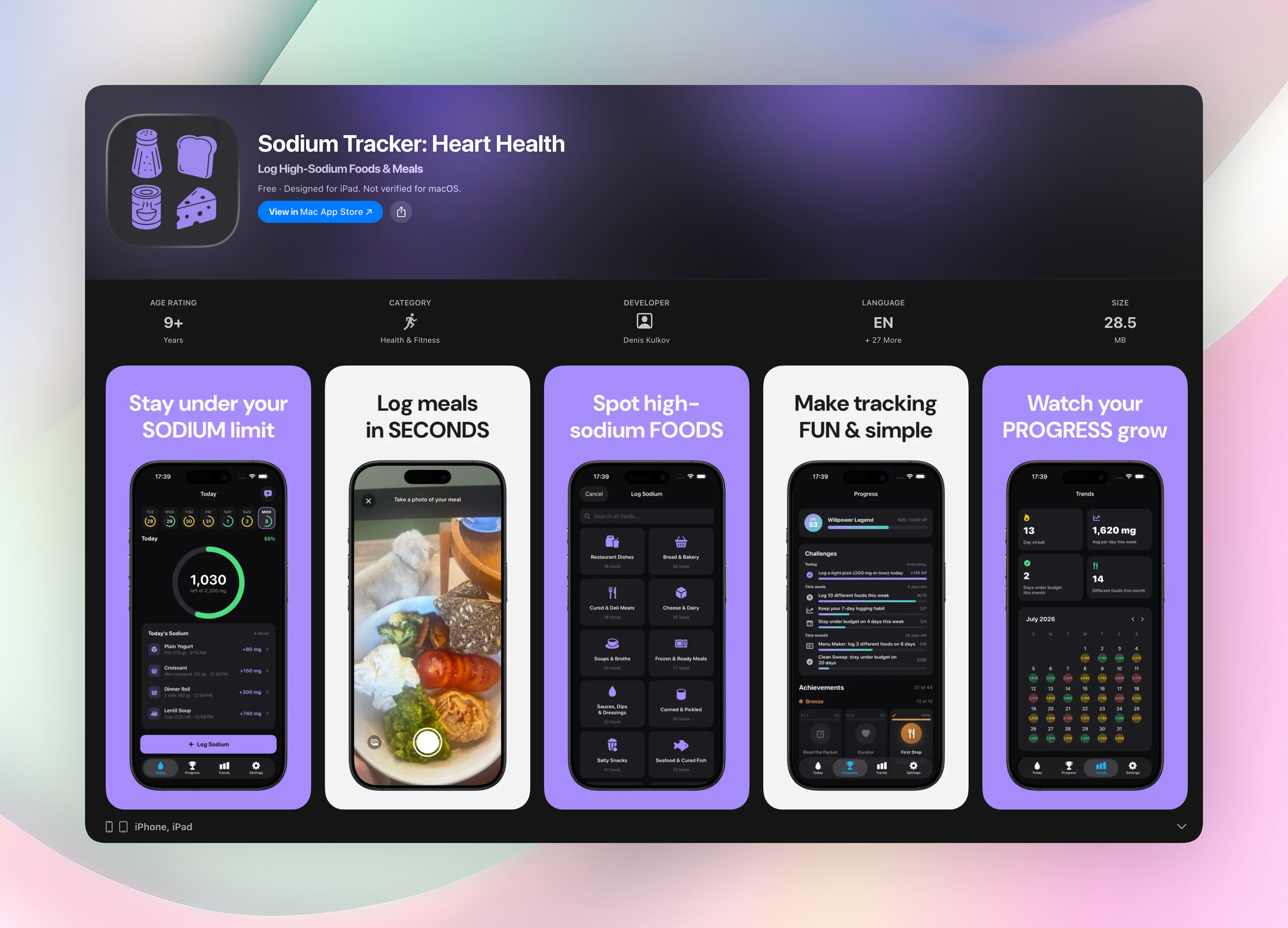
Sodium Tracker is the clearest choice if you want a MyFitnessPal alternative built around one specific health metric. The iPhone and iPad app lets you set a daily sodium limit using FDA, AHA, or WHO guidance. You can also choose options that better match your age and preferred level of strictness.
Logging is quick, especially for common high-sodium foods. A simple progress ring shows how much of your daily limit remains, so you can check your status without digging through calories, macros, and unrelated nutrition fields. You can view sodium in milligrams or salt in grams, while the weekly calendar makes it easier to spot your tracking streak.
Useful features include:
- Guidance-based sodium limits from FDA, AHA, and WHO recommendations
- Fast logging for high-sodium foods and drinks
- Photo, barcode, or voice logging, with results reviewed before saving
- A simple daily progress ring
- On-device use with no account, ads, or data collection
If you want a focused scorekeeper instead of a broad food diary, Get Sodium Tracker. You can also find Sodium Tracker on the App Store.
2. Cronometer: Calorie Counter App
Best for: Detailed nutrition information beyond calories and macros.
Cronometer works well for people who want to examine vitamins, minerals, and other nutrition details in an organized food diary. Its Android app tracks more than 95 nutrients and includes barcode scanning, fasting tracking, charts, and connections to health and fitness data.
Its biggest strength is the depth of its nutrient information. That detail helps with careful nutrition reviews, although it takes more attention than Sodium Tracker’s narrower focus on sodium and salt.
3. Lose It! – Calorie Counter App
Best for: Familiar calorie counting with weight-loss planning.
Lose It! creates personalized calorie budgets and supports food, exercise, weight, and macro logging. Its plans and progress charts provide visible milestones, which can make a general calorie goal easier to stick with.
Premium adds barcode scanning, intermittent-fasting tools, and photo or voice meal logging. The main appeal is the combination of a daily calorie budget and clear tools for tracking weight-loss progress.
4. MacroFactor - Macro Tracker
Best for: Adaptable calorie and macro targets.
MacroFactor uses your food and weight data to adjust calorie and macro targets over time. Its verified food database, barcode scanner, weekly check-ins, and weight-trend insights make it a good fit for people who want guidance based on actual progress.
Its dynamic targets set it apart. Instead of keeping you on one fixed calorie goal, the app responds to real-world results. Consistent logging and regular trend reviews matter if you want those recommendations to be useful.
5. AI Calorie Tracker by Yazio
Best for: Calorie tracking with meal plans and fasting support.
YAZIO combines a searchable food database with barcode scanning, recipes, and meal-planning tools. It also tracks activity, water intake, and personalized nutrition goals, giving it a broader daily-health focus than a basic food diary.
The intermittent-fasting tools are helpful if fasting is already part of your routine. YAZIO makes the most sense for people who want calorie logging along with meal ideas and planning support.
6. Calorie Counter - MyNetDiary
Best for: Android users who want several quick ways to log meals.
MyNetDiary supports barcode scanning, Meal Scan, voice logging, and food search, so you do not have to type every item manually. It tracks calories, macros, protein, and micronutrients for a more complete nutrition view.
It also connects with Health Connect, Samsung Health, and Wear OS. Its biggest strength is the choice of logging methods, which can make regular meal tracking less repetitive.
7. Calorie Counter by fatsecret
Best for: Food tracking with recipes and community support.
fatsecret includes a food diary, calorie and macro tracking, exercise and weight records, barcode scanning, recipes, and image recognition for foods and meals. It also works with Apple Health and Fitbit.
The built-in community gives it a more social feel than a private tracker. Choose it if encouragement, shared diet support, and familiar logging tools matter alongside calorie control.
8. Foodvisor - AI Calorie Counter App
Best for: Photo- or voice-based food logging.
Foodvisor accepts meal photos, voice input, text searches, and barcode scans, giving you several ways to record what you eat. Along with calories and macros, it tracks vitamins, minerals, hydration, weight progress, fasting, and physical activity.
Its main draw is the mix of AI-assisted and traditional logging options. The wider dashboard may suit people who want food, exercise, hydration, and progress tracking in one iPhone app.
9. Lifesum: AI Calorie Tracker
Best for: Calorie tracking combined with meal plans and lifestyle guidance.
Lifesum supports photo, voice, text, and barcode logging, as well as calorie and macro tracking. It adds recipes, meal plans, water tracking, fasting plans, and activity integrations for people who want more structure around daily habits.
Its personalized Life Score offers a quick progress check. Lifesum is a good fit when meal planning and general lifestyle guidance matter as much as recording individual foods.
How we picked these apps
This list focuses on genuine MyFitnessPal alternatives for people who want a different tracking style or a more specific health goal. We compared food-entry speed, nutrition detail, calorie and macro support, meal planning, fasting tools, and health-data integrations.
Each app also needed a clear reason to choose it over a general-purpose calorie tracker. The selection includes iPhone and Android options, with the listed platform shown in the comparison table. Instead of suggesting that every app suits everyone, these recommendations highlight specific strengths such as sodium tracking, adaptive targets, photo logging, or recipe support.
Frequently asked questions
Can Sodium Tracker replace MyFitnessPal?
Yes, if you only need to monitor sodium or salt. It is not designed to replace a full calorie, macro, exercise, or recipe database, but its focused daily limit and progress ring make sodium tracking easier.
Which apps are best for calories and macros?
Lose It! is a practical choice for calorie budgets and weight-loss milestones, while MacroFactor is better for adaptive targets based on logged results. Cronometer is the strongest option when you want detailed information on vitamins, minerals, and other nutrients.
Which apps support photos, voice, fasting, or meal plans?
Foodvisor supports photos, voice, text, and barcode logging. Lose It!, YAZIO, MyNetDiary, fatsecret, and Lifesum also offer combinations of barcode, photo, or voice entry. YAZIO and Lifesum are especially useful for recipes, meal plans, and fasting, while several options also track hydration or activity. Check platform availability before choosing an app.
The verdict
Sodium Tracker is the top pick for a simpler MyFitnessPal alternative focused on sodium and salt. Its FDA, AHA, and WHO-based limit options, quick food logging, and daily progress ring make the goal easy to follow. The other apps are better suited to broad calorie, macro, meal-planning, or AI-assisted tracking. If sodium is your priority, Get Sodium Tracker.
Free Sodium tools
- Banana Potassium CalculatorEnter a banana size and quantity to see total potassium in milligrams, its share of an adult daily target, and how it compares with other potassium-rich foods.
- Blood Pressure Category ChartUse this blood pressure chart by age and gender to place an adult reading in the AHA category it reaches. Age and sex do not change the adult thresholds.
- Daily Potassium CalculatorEstimate how much potassium per day you need and compare that target with foods eaten today.
- Daily Sodium Limit CalculatorEnter your age and a guideline to see how much sodium per day it recommends, plus the equivalent amount of table salt and a comparison with average US intake.
- DASH Diet Food ListSearch a DASH diet food list by food group, serving target and sodium preference. Review each food’s placement, serving context and sodium notes.
- DASH Diet Grocery List BuilderChoose your household size, days of meals, DASH food groups and sodium preference to build a printable grocery list.
- DASH Diet Meal PlannerPick your calorie level, your sodium target and how many meals you eat. The planner shows the published DASH daily serving targets for that calorie level and divides them — along with your sodium budget — across your meals.
- High-Sodium Foods ChartFilter a chart of high sodium foods by category and serving size. See sodium per serving and its percentage of the 2,300 mg daily limit.
- Low-Sodium Foods Reference ToolFilter a fixed list of foods low in sodium by category, serving size and sodium threshold.
- MAP Blood Pressure CalculatorEnter systolic and diastolic readings to estimate mean arterial pressure, see the published MAP reference band, calculate pulse pressure and identify the AHA category for the raw reading.
- Milligrams to Grams ConverterConvert milligrams to grams and between micrograms, milligrams, grams, kilograms, ounces and pounds. See the result written out and compare common nutrition-label values.
- Salt to Sodium ConverterConvert between salt and sodium units instantly. See grams of salt, milligrams of sodium, teaspoons of salt and the share of the 2,300 mg daily limit.
- Sodium Per-Meal Budget CalculatorTurn a daily sodium goal into an even meal-by-meal budget, then adjust it after reserving sodium for snacks.