
Best 7 Careclinic Alternatives in 2026: Compare Top Features
Introduction
Sodium Tracker is the best pick among careclinic alternatives if you mainly want a simple way to monitor sodium, salt, and heart-health goals. This list also covers nutrition tracking, symptom journals, medication reminders, digestive-health logs, and broader medical records, with options for different devices and tracking styles.
Quick comparison
| App | Best for | Platform | Price | Standout feature |
|---|---|---|---|---|
| Sodium Tracker: Heart Health | Sodium and salt tracking | iPhone, iPad | Unknown | Guidance-based daily limit and progress ring |
| Bearable - Symptom Tracker | Detailed symptom journaling | iPhone | Unknown | Custom tracking and correlation insights |
| Medisafe Pill & Med Reminder | Medication reminders | Android | Unknown | Complex schedules, refills, and caregiver tools |
| Pill Reminder MyTherapy | Medication and health records | iPhone | Unknown | Dose tracking with measurements and reports |
| Dosecast: My Pill Reminder App | Flexible medication schedules | iPhone | Unknown | Daily, weekly, monthly, and interval reminders |
| Guava: Health Tracker | Broad health tracking | Android | Unknown | Personal logs linked with medical records |
| Cara Care: IBS, FODMAP Tracker | Digestive-health patterns | iPhone | Unknown | Food, bowel, symptom, and trigger tracking |
Sodium Tracker is the focused choice for sodium and salt. Bearable and Guava work more like broad health journals, while Medisafe, MyTherapy, and Dosecast focus on medication reminders, refills, and dose histories. Cara Care is the more targeted option for digestive symptoms and food triggers.
1. Sodium Tracker: Heart Health
Best for: People who want a straightforward way to track sodium intake and stay within a daily limit.
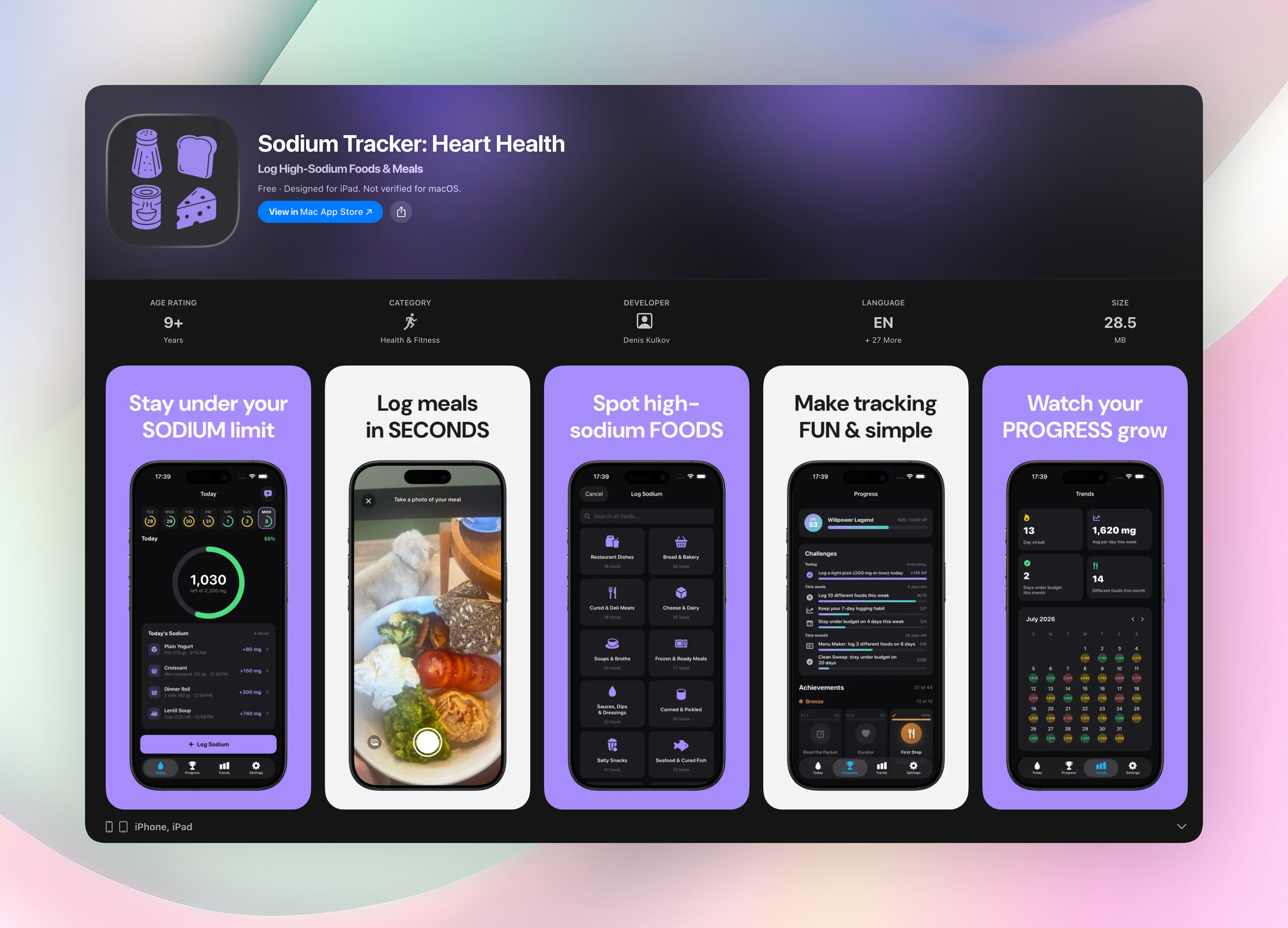
Sodium Tracker is the best overall CareClinic alternative when your main concern is salt intake, not maintaining a complete medical diary. Rather than making you build a target from scratch, it offers guidance based on FDA, AHA, or WHO recommendations. You can also adjust the goal based on your age and how strict you want your limit to be.
Logging is quick, especially for common high-sodium foods. The app includes a library of 187 foods and drinks, along with meal logging from a photo, barcode, or voice input. AI reviews those entries before anything is saved. You can view sodium in milligrams or salt in grams, depending on which format is easier to follow.
A clear progress ring shows how much of your daily allowance remains. That makes it handy to check before dinner or while comparing packaged foods. A weekly calendar also lets you see your tracking streak.
The focused design suits people watching salt because of blood pressure concerns or broader heart-health goals. It is available on iPhone and iPad, works without an account, and does not collect data or show ads.
- Standout feature: Daily sodium progress ring tied to recognized health guidance.
- Get Sodium Tracker
- Sodium Tracker on the App Store
2. Bearable - Symptom Tracker
Best for: Detailed symptom and health-pattern journaling on iPhone.
Bearable gives you a customizable journal for symptoms, mood, pain, medication, treatments, habits, and daily activities. Reminders make regular entries easier, while trend views and correlation insights help you spot what might be affecting your symptoms over time.
It is a better fit than a basic scorekeeper if you want more context around how you feel. Data export can also help you prepare a clearer record for a conversation with a healthcare professional.
- Standout feature: Customizable tracking that connects symptoms with habits, treatments, and daily factors.
3. Medisafe Pill & Med Reminder
Best for: Reliable medication reminders on Android, especially for complicated dosing schedules.
Medisafe focuses on taking medicines on time, but it also handles vitamins and supplements, refill alerts, appointments, and drug-interaction checks. Its scheduling tools are useful when prescriptions do not follow a simple morning-and-evening routine.
Caregiver support adds another practical option for families helping someone manage medications. Choose it when dose reminders and medication safety matter more than nutrition or symptom journaling.
- Standout feature: Medication management that brings together dose reminders, interaction checks, refills, and caregiver tools.
4. Pill Reminder MyTherapy
Best for: Medication reminders combined with broader health records on iPhone.
MyTherapy tracks doses and refill needs alongside health measurements, symptoms, and pain. Apple Health integration makes it a convenient choice for people already collecting information through an iPhone or another Apple device.
Its health reports offer more context than a list of completed reminders. They can help you review medication use and changes in symptoms over time.
- Standout feature: Medication tracking paired with measurements, symptom notes, and shareable health reports.
5. Dosecast: My Pill Reminder App
Best for: Unusual or highly flexible medication schedules on iPhone.
Dosecast supports daily, weekly, monthly, and interval-based reminders, so it can handle more than standard once- or twice-daily dosing. You can track medications, vitamins, supplements, and birth control in one place.
Dose history, remaining quantities, refill details, and treatment dates make it useful when you want a fuller medication record instead of a basic alarm.
- Standout feature: Flexible interval scheduling for medications and supplements with different timing needs.
6. Guava: Health Tracker
Best for: Android users who want one broad health-tracking dashboard.
Guava combines symptoms, mood, medications, habits, medical records, and health insights. Along with medication reminders, it can track pill supplies and refill alerts. Connections to provider records also reduce the need to keep information in separate places.
Doctor-visit summaries are especially useful before an appointment. This is the broadest Android choice here, though it may feel like more tracking than you need for one specific goal.
- Standout feature: Combining personal health logs with provider records and visit summaries.
7. Cara Care: IBS, FODMAP Tracker
Best for: Digestive-health tracking on iPhone.
Cara Care focuses on IBS, IBD, GERD, food intolerances, and related digestive conditions. You can record meals, bowel movements, symptoms, medication, stress, and other possible triggers.
Pattern reviews help you look for connections between food and symptoms, while personalized dietary guidance adds useful context to each entry. It is a stronger choice than a general journal when digestive issues are the main reason you are tracking.
- Standout feature: Digestive tracking that links food, bowel habits, symptoms, stress, and medication.
How we picked these apps
Each app needed a clear health-tracking use case for people replacing or supplementing CareClinic. We included focused tools, such as a sodium tracker or digestive log, along with broader journals for people who want more detail.
For medication apps, we considered reminder flexibility, dose history, refill support, supplement tracking, and complex schedules. We also looked at symptom correlations, health reports, dietary guidance, provider sharing, and caregiver features.
Platform availability was another important filter. An excellent app is not useful if it does not work on your iPhone, iPad, or Android device. Finally, we prioritized practical features that make regular logging easier and help you review the information later.
Frequently asked questions
Is Sodium Tracker a full CareClinic replacement?
No. Sodium Tracker is a focused sodium and salt tracker rather than a complete medical record system. It is the better choice when your main goal is setting a daily limit, logging food, and checking your remaining sodium at a glance.
Which app is best for medication reminders?
Medisafe is the strongest Android option for complex schedules, refills, interaction checks, and caregiver support. MyTherapy combines reminders with measurements and reports on iPhone, while Dosecast stands out for flexible interval timing and detailed dose histories.
Can these apps track symptoms, mood, habits, and medication together?
Bearable and Guava are the broadest choices for combining those categories. Cara Care is more condition-specific, focusing on digestive symptoms, meals, bowel movements, stress, and medication instead of general health tracking.
Some picks support exports, reports, provider records, or caregiver involvement, but the exact tools vary. Check platform compatibility before choosing an iOS- or Android-only app. App logs can support a conversation with a healthcare professional, but they should not replace medical advice or treatment.
The verdict
For anyone searching for a CareClinic alternative centered on sodium, salt, and heart-health tracking, Sodium Tracker is the top pick. Its guidance-based limits, quick food logging, and daily progress ring make intake easy to understand at a glance. Choose a broader symptom journal or medication manager if you need a more complete health record. For iPhone or iPad, Get Sodium Tracker.
Free Sodium tools
- Banana Potassium CalculatorEnter a banana size and quantity to see total potassium in milligrams, its share of an adult daily target, and how it compares with other potassium-rich foods.
- Blood Pressure Category ChartUse this blood pressure chart by age and gender to place an adult reading in the AHA category it reaches. Age and sex do not change the adult thresholds.
- Daily Potassium CalculatorEstimate how much potassium per day you need and compare that target with foods eaten today.
- Daily Sodium Limit CalculatorEnter your age and a guideline to see how much sodium per day it recommends, plus the equivalent amount of table salt and a comparison with average US intake.
- DASH Diet Food ListSearch a DASH diet food list by food group, serving target and sodium preference. Review each food’s placement, serving context and sodium notes.
- DASH Diet Grocery List BuilderChoose your household size, days of meals, DASH food groups and sodium preference to build a printable grocery list.
- DASH Diet Meal PlannerPick your calorie level, your sodium target and how many meals you eat. The planner shows the published DASH daily serving targets for that calorie level and divides them — along with your sodium budget — across your meals.
- High-Sodium Foods ChartFilter a chart of high sodium foods by category and serving size. See sodium per serving and its percentage of the 2,300 mg daily limit.
- Low-Sodium Foods Reference ToolFilter a fixed list of foods low in sodium by category, serving size and sodium threshold.
- MAP Blood Pressure CalculatorEnter systolic and diastolic readings to estimate mean arterial pressure, see the published MAP reference band, calculate pulse pressure and identify the AHA category for the raw reading.
- Milligrams to Grams ConverterConvert milligrams to grams and between micrograms, milligrams, grams, kilograms, ounces and pounds. See the result written out and compare common nutrition-label values.
- Salt to Sodium ConverterConvert between salt and sodium units instantly. See grams of salt, milligrams of sodium, teaspoons of salt and the share of the 2,300 mg daily limit.
- Sodium Per-Meal Budget CalculatorTurn a daily sodium goal into an even meal-by-meal budget, then adjust it after reserving sodium for snacks.